E-commerce Web Scraping Made Easy

E-commerce Web Scraping Made Easy

E-commerce Web Scraping Made Easy

Scrape pricing, stock, product attributes, reviews, and full catalog data from almost any ecommerce website.


Use a simple dashboard. No coding. No browser extensions.

Scrape pricing, stock, product attributes, reviews, and full catalog data from almost any ecommerce website.


Use a simple dashboard. No coding. No browser extensions.

Scrape pricing, stock, product attributes, reviews, and full catalog data from almost any ecommerce website.


Use a simple dashboard. No coding. No browser extensions.

ShopScraping dashboard showing extracted product data from an online store
ShopScraping data collection settings panel showing schedule and export format options

Built Specifically for Ecommerce

Built Specifically for Ecommerce

Built Specifically for Ecommerce

Why ecommerce scraping needs a purpose-built tool

Why ecommerce scraping needs a purpose-built tool

Why ecommerce scraping needs a purpose-built tool

Most web scraping tools are built to grab everything on a page and leave you to sort out what's a price, what's a variant, and what's just navigation.


ShopScraping is built for a more specific job: turning online store pages into clean product data.


Because it understands what a product page is, you can select only the fields that drive your decisions — price, stock, SKU, specifications, reviews — and get them back in a structured format, without the noise.


A general-purpose scraper can't tell a price from a phone number; a purpose-built ecommerce scraper starts from the assumption that it's looking at a product.

Most web scraping tools are built to grab everything on a page and leave you to sort out what's a price, what's a variant, and what's just navigation.


ShopScraping is built for a more specific job: turning online store pages into clean product data.


Because it understands what a product page is, you can select only the fields that drive your decisions — price, stock, SKU, specifications, reviews — and get them back in a structured format, without the noise.


A general-purpose scraper can't tell a price from a phone number; a purpose-built ecommerce scraper starts from the assumption that it's looking at a product.

Most web scraping tools are built to grab everything on a page and leave you to sort out what's a price, what's a variant, and what's just navigation.


ShopScraping is built for a more specific job: turning online store pages into clean product data.


Because it understands what a product page is, you can select only the fields that drive your decisions — price, stock, SKU, specifications, reviews — and get them back in a structured format, without the noise.


A general-purpose scraper can't tell a price from a phone number; a purpose-built ecommerce scraper starts from the assumption that it's looking at a product.
Extract Any Product Data & Full Catalogs

Extract Any Product Data & Full Catalogs

One ecommerce product scraper for structured product feeds and full catalog exports from virtually any online store. See the complete product data extraction field spec.

One ecommerce product scraper for structured product feeds and full catalog exports from virtually any online store. See the complete product data extraction field spec.

Product Data

Title

Manufacturer

Category

Description

Specification

Pricing & Availability

Regular price

Sale price

Stock status

Currency

Pricing & Availability

Regular price

Sale price

Stock status

Currency

Discount

Identifiers

SKU

GTIN/EAN

MPN

ISBN

Other IDs

Options

Size

Color

Condition

Package Quantity

Media & Ratings

Primary image

Gallery images

Average rating

Review count

Custom Attributes

Any attribute you specify

Structured ecommerce product data fields extracted by ShopScraping: price, stock status, SKU, technical specs, and shipping information
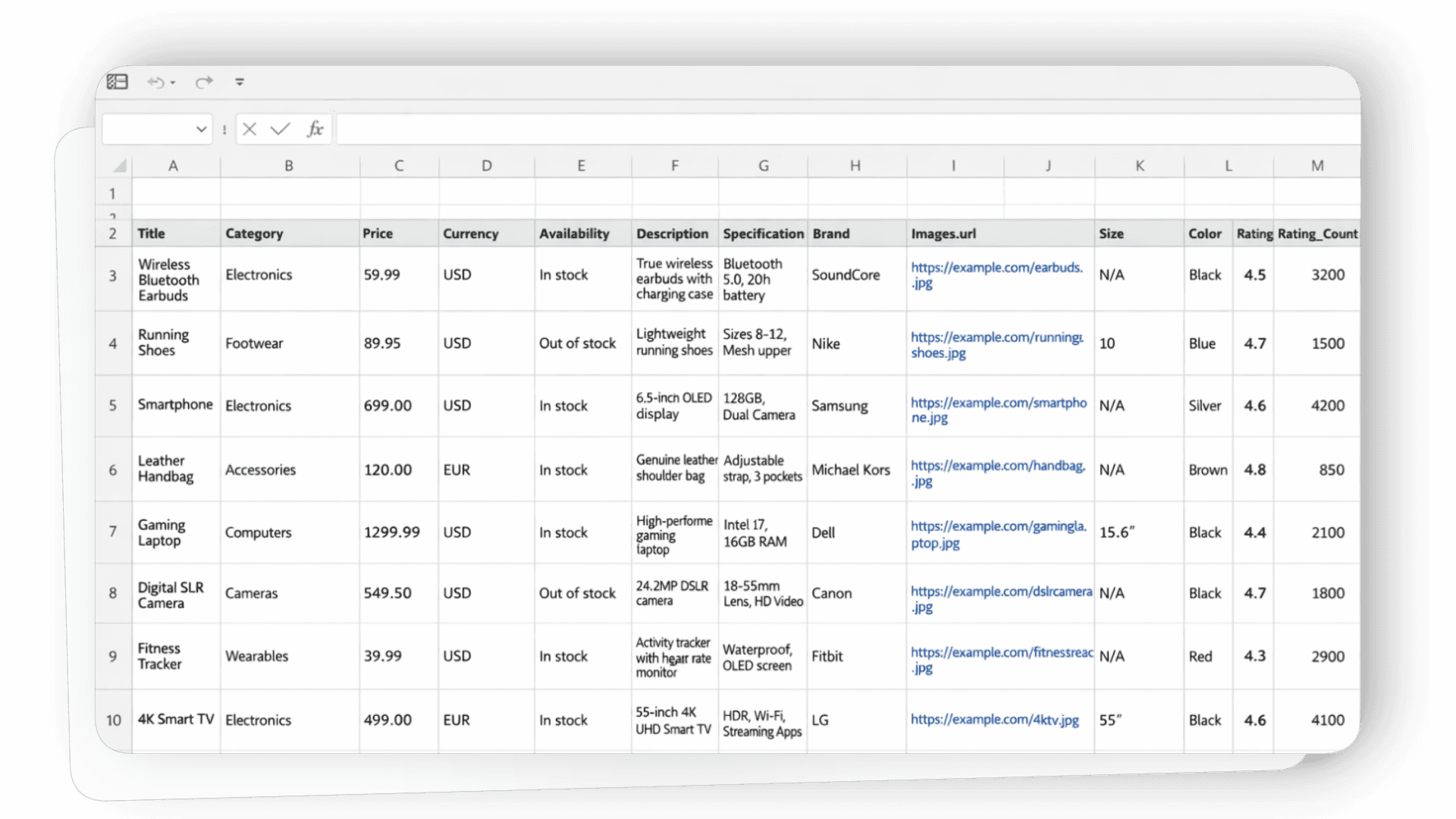
Product catalog export preview in ShopScraping showing price, availability and category fields in structured format

Which Online Stores Can You Scrape?

Which Online Stores Can You Scrape?

Which Online Stores Can You Scrape?

Platform-independent ecommerce scraping

Platform-independent ecommerce scraping

Platform-independent ecommerce scraping

ShopScraping works with storefronts built on every major ecommerce engine, plus custom-built shops that don't run on a platform at all. Because field detection is automatic rather than template-based, adding a new store means pasting a URL — not writing a new parser.


Platforms: Shopify · WooCommerce · Magento / Adobe Commerce · BigCommerce · PrestaShop · OpenCart · Wix Stores · Squarespace Commerce · Salesforce Commerce Cloud · custom-built stores


Store types: single-brand DTC stores · multi-brand retailers · regional marketplaces · B2B and wholesale catalogs · price comparison sites


Not sure whether your target store is supported? Paste the URL and run a test extraction — it takes under a minute.

ShopScraping works with storefronts built on every major ecommerce engine, plus custom-built shops that don't run on a platform at all. Because field detection is automatic rather than template-based, adding a new store means pasting a URL — not writing a new parser.


Platforms: Shopify · WooCommerce · Magento / Adobe Commerce · BigCommerce · PrestaShop · OpenCart · Wix Stores · Squarespace Commerce · Salesforce Commerce Cloud · custom-built stores


Store types: single-brand DTC stores · multi-brand retailers · regional marketplaces · B2B and wholesale catalogs · price comparison sites


Not sure whether your target store is supported? Paste the URL and run a test extraction — it takes under a minute.

ShopScraping works with storefronts built on every major ecommerce engine, plus custom-built shops that don't run on a platform at all. Because field detection is automatic rather than template-based, adding a new store means pasting a URL — not writing a new parser.


Platforms: Shopify · WooCommerce · Magento / Adobe Commerce · BigCommerce · PrestaShop · OpenCart · Wix Stores · Squarespace Commerce · Salesforce Commerce Cloud · custom-built stores


Store types: single-brand DTC stores · multi-brand retailers · regional marketplaces · B2B and wholesale catalogs · price comparison sites


Not sure whether your target store is supported? Paste the URL and run a test extraction — it takes under a minute.

Business Outcomes

Turn Ecommerce Data Scraping into Competitive Advantage

Reduce Manual Research

Replace repetitive data collection tasks with automated workflows, freeing teams to focus on analysis and strategic initiatives.


Gain Market Visibility

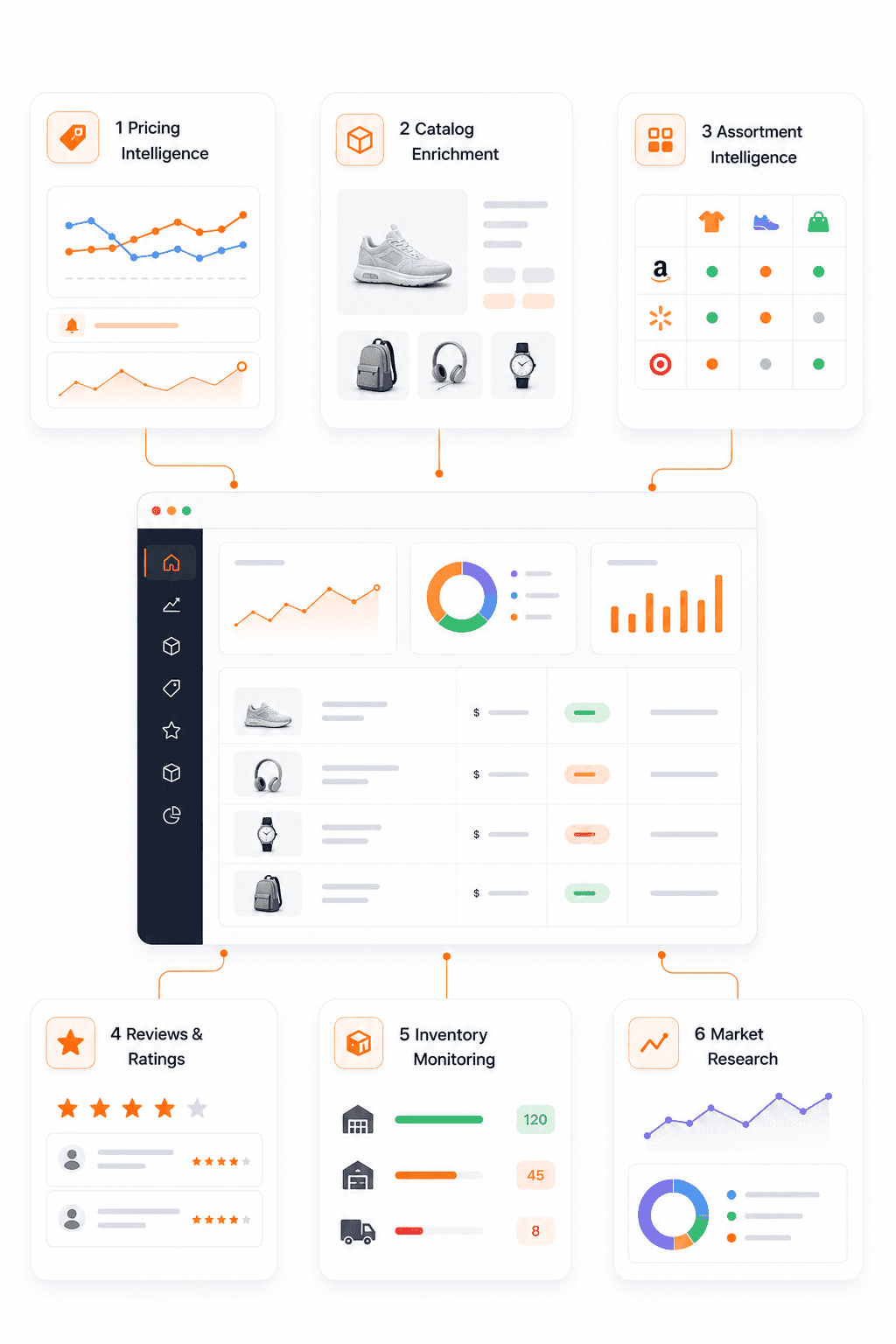
Retail data scraping gives you visibility into product availability, assortment changes, and emerging market trends.


Stay Ahead on Pricing

Stay informed about competitor pricing and identify opportunities to improve margins and market positioning. Our automated price scraper keeps your data fresh daily, weekly, monthly, or on demand.


Support Assortment Planning

Use market and competitor data to identify assortment gaps, evaluate product opportunities, and make informed merchandising decisions.


Improve Product Data Quality

Build complete, accurate, and standardized catalogs across all channels.


Accelerate Catalog Expansion

Launch new products faster with import-ready catalog files instead of manual product onboarding.

Ecommerce scraping results in the ShopScraping dashboard — product data from multiple online stores side by side

Technology Behind Our Ecommerce Web Scraper

Technology Behind Our Ecommerce Web Scraper

Technology Behind Our Ecommerce Web Scraper

Collect accurate product, pricing and inventory data at scale without dealing with website changes, blocks, or manual maintenance.

Collect accurate product, pricing and inventory data at scale without dealing with website changes, blocks, or manual maintenance.

Collect accurate product, pricing and inventory data at scale without dealing with website changes, blocks, or manual maintenance.

AI-Powered Field Detection

Automatically identifies product titles, pricing, inventory levels, reviews, images and attributes without manual mapping.

AI-Powered Field Detection

Automatically identifies product titles, pricing, inventory levels, reviews, images and attributes without manual mapping.

Automatic Website Adaptation

Store redesigns and layout changes are detected automatically to keep data collection running smoothly.

Automatic Website Adaptation

Store redesigns and layout changes are detected automatically to keep data collection running smoothly.

Advanced Anti-Blocking Infrastructure

Built-in anti-blocking technology helps maintain stable data collection.

Advanced Anti-Blocking Infrastructure

Built-in anti-blocking technology helps maintain stable data collection.

No-Code Configuration

Set up scraping through a simple dashboard without APIs, browser extensions or custom scripts.

No-Code Configuration

Set up scraping through a simple dashboard without APIs, browser extensions or custom scripts.

Custom Attribute Extraction

Capture variants, delivery information, promotions, seller data and any custom product fields.

Custom Attribute Extraction

Capture variants, delivery information, promotions, seller data and any custom product fields.

Scheduled Monitoring

Run one-time scraping or automated daily, weekly and monthly extraction tasks.

Scheduled Monitoring

Run one-time scraping or automated daily, weekly and monthly extraction tasks.

Data Validation & Quality Control

Automatic validation checks help ensure collected information remains accurate and consistent.

Data Validation & Quality Control

Automatic validation checks help ensure collected information remains accurate and consistent.

Structured Data Delivery

Receive clean datasets in CSV, Excel, JSON, or import-ready Shopify and WooCommerce files.

Structured Data Delivery

Receive clean datasets in CSV, Excel, JSON, or import-ready Shopify and WooCommerce files.

Works with Any E-commerce Platform

The same ecommerce scraper works across Shopify, WooCommerce, Magento, BigCommerce and custom-built stores.

Works with Any E-commerce Platform

The same ecommerce scraper works across Shopify, WooCommerce, Magento, BigCommerce and custom-built stores.

For a detailed explanation of how ShopScraping works, see our Product page.

For a detailed explanation of how ShopScraping works, see our Product page.

For a detailed explanation of how ShopScraping works, see our Product page.

Start Scraping in Minutes

No coding. No browser extensions. No infrastructure setup.

Ecommerce product mockup showing structured data fields such as price, availability, SKU, specifications, and shipping details.

1

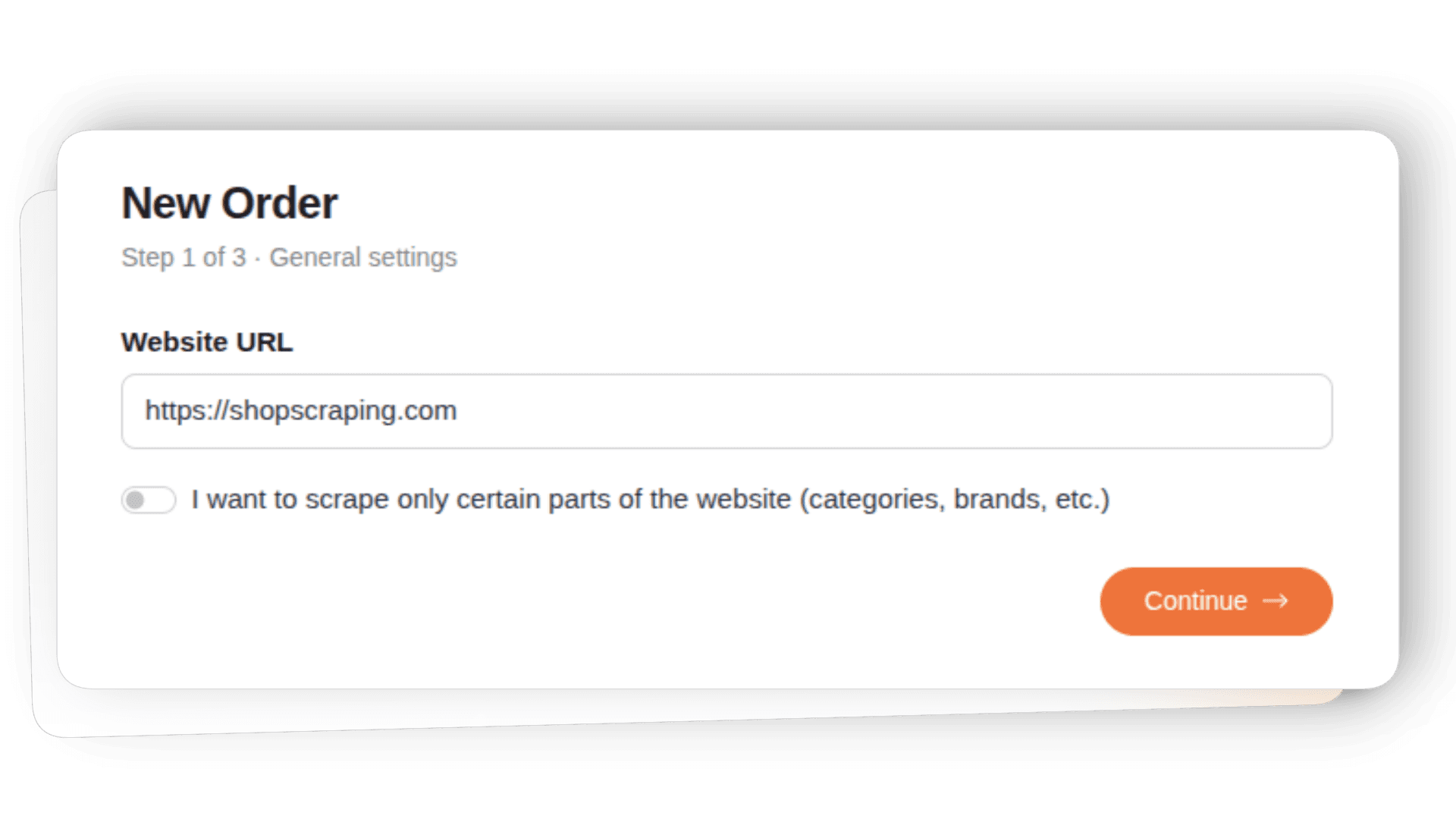
Enter a website URL

Add the product or website URLs you want to track. You can include product pages, categories, or competitor sites.

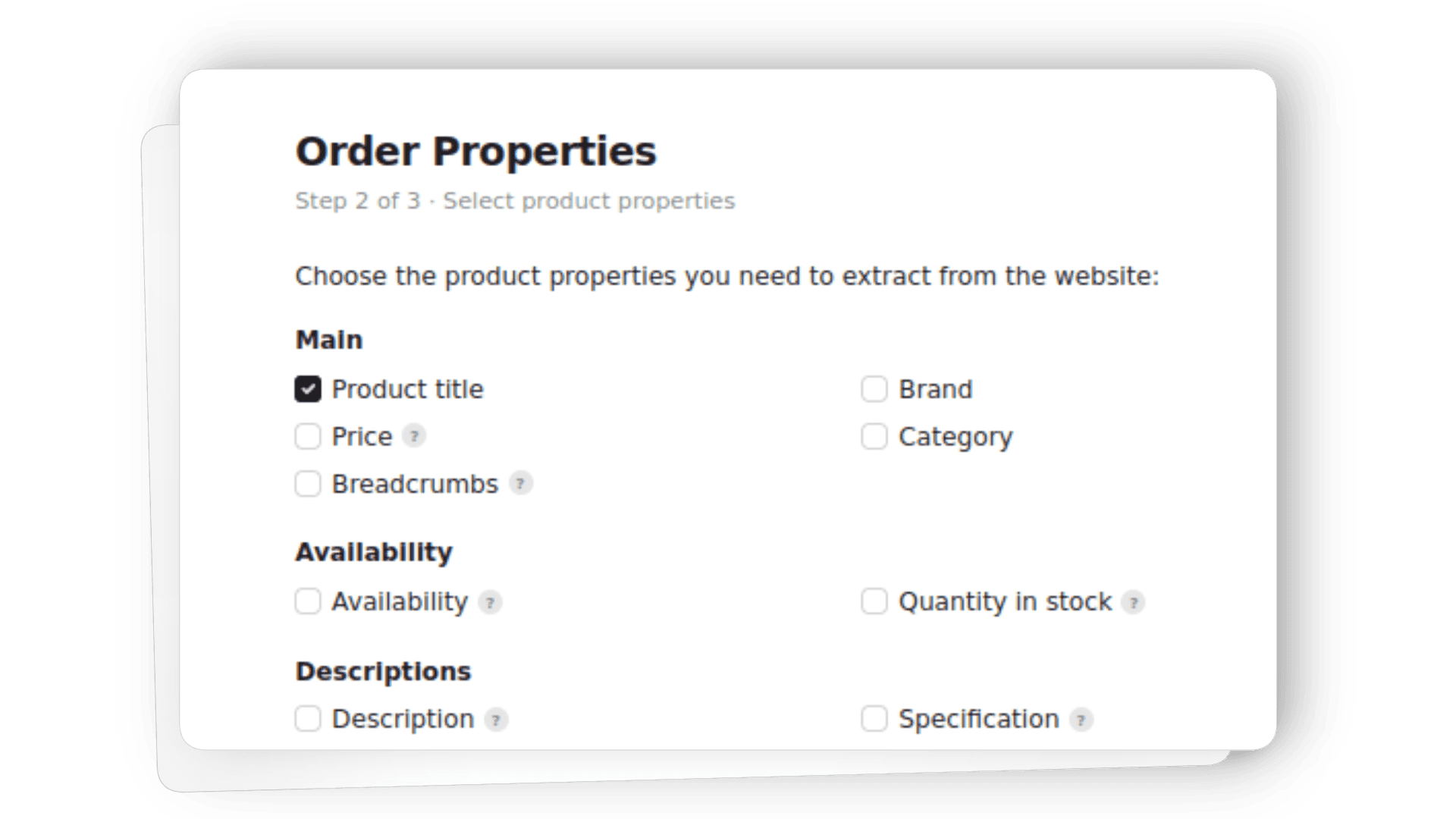
Selecting data fields such as price and availability in ShopScraping

2

Choose what data to extract

Select the fields you need, such as pricing, availability, or product details. Customize the dataset to match your use case.

Downloading extracted e-commerce data as CSV or JSON from ShopScraping

3

Run & get results

Receive clean data in CSV, Excel, or JSON as soon as processing is complete. Run one-time collections or schedule recurring extractions.

Frequently Asked Questions About Ecommerce Web Scraping

What is ecommerce web scraping?

Ecommerce web scraping — also called ecommerce scraping — is the automated extraction of product data from online stores. Instead of a person opening pages and copying details into a spreadsheet, software reads each product page, pulls the fields you care about — price, stock status, SKU, specifications, images, reviews — and returns them as a structured dataset in CSV, Excel, or JSON. It’s what sits behind competitor price monitoring, catalog enrichment, and market research at any meaningful scale. The concept is simple; doing it reliably against dynamic, anti-bot-protected stores is the hard part, which is what a purpose-built tool handles for you.

Do I need to know how to code?

No. ShopScraping is a no-code ecommerce web scraper: you paste a store URL, select the fields you want, and run the extraction from a dashboard. There are no scripts to write, no proxies to configure, no browser extensions to install, and no selectors to maintain. Field detection is automatic — the platform identifies titles, prices, stock status, and attributes without manual mapping. Teams in pricing, category management, and market research use it directly, without routing requests through engineering.

Which online stores can I scrape?

Almost any publicly accessible online store. ShopScraping works with Shopify, WooCommerce, Magento / Adobe Commerce, BigCommerce, PrestaShop, and custom-built storefronts, along with regional marketplaces and B2B catalogs. Because extraction is driven by automatic field detection rather than per-site templates, adding a store you’ve never scraped before doesn’t require any new setup on our side — you paste the URL and run it.

Can I scrape large marketplaces like Amazon or eBay?

Yes. ShopScraping works as an Amazon scraper and an eBay scraper, along with other large marketplaces and regional platforms. Marketplaces run the most aggressive anti-bot protection of any store type, which affects how often data can be refreshed rather than whether it can be collected at all.

How often can the data be refreshed?

You can run a one-time extraction whenever you need a fresh dataset, or schedule recurring collection on a daily, weekly, or monthly cycle. Most teams tracking prices run daily; catalog and assortment work is usually weekly or monthly. If you need a different schedule, we can configure a custom collection frequency to match your workflow.

What format does the data come in?

Data can be exported as CSV, Excel (XLSX), JSON, or import-ready files for Shopify and WooCommerce. We can also provide custom export formats, API delivery, and integrations to fit your existing workflow.

Is ecommerce web scraping legal?

Scraping publicly available product data — prices, stock, specifications — for price comparison and market research is widely treated as a legitimate business activity. Legality depends much more on what you collect and how than on scraping as a category: data behind a login or paywall, personal data covered by GDPR, and access that bypasses controls or degrades a site’s performance are where real risk lives. ShopScraping collects public product pages only, excludes personal data, and respects rate limits. This is general information, not legal advice — if you scrape at scale or in a regulated industry, talk to a lawyer familiar with data law in your jurisdiction.

What happens when a store redesigns its site or blocks the scraper?

This is the single biggest reason in-house scrapers fail, and it’s the part we take on. Layout changes are detected automatically and extraction rules adapt, so a redesign doesn’t quietly turn your data feed into empty columns. Anti-blocking infrastructure keeps collection stable against rate limiting and bot detection. Automated validation checks every record, which matters more than it sounds: the common failure mode isn’t a visible error but silent degradation, where a dataset looks complete and is quietly missing a third of the products. You don’t maintain any of this.

How is this different from a web scraping API or a general-purpose scraper?

General-purpose scrapers are built to extract anything from any website, which means you have to tell them where the price is on each new store. Scraping APIs take care of fetching pages, JavaScript rendering, and proxy management, then return raw HTML or structured responses — powerful, but they still assume you have a developer to parse and map the data. ShopScraping is built specifically for ecommerce: it knows what a product page is, what a variant is, and what stock availability means, so the output is a clean product dataset rather than raw HTML you still have to parse. That’s a deliberate trade-off: a narrower scope in exchange for far less work on your side.

Start Scraping Ecommerce Data Today

Start Scraping Ecommerce Data Today

Monitor prices, inventory and product catalogs without managing technical infrastructure.

Start Scraping Ecommerce Data Today

Monitor prices, inventory and product catalogs without managing technical infrastructure.

Start Scraping Ecommerce Data Today

Monitor prices, inventory and product catalogs without managing technical infrastructure.